Revolutionizing HR with ChatGPT for Human Resources

The field of Human Resources (HR) is experiencing a digital transformation, and at the forefront of this revolution is ChatGPT for Human Resources. As organizations strive to optimize their HR processes and elevate the employee experience, AI-driven solutions like ChatGPT are becoming essential tools for HR professionals. In this article, we’ll explore how ChatGPT for Human Resources is reshaping the HR landscape and delivering tangible benefits to both organizations and their employees.

ChatGPT for Human Resources: A Game-Changer

ChatGPT for Human Resources is an AI-powered chatbot that empowers HR departments to provide faster, more personalized, and efficient services. Leveraging natural language processing (NLP) capabilities, ChatGPT can understand and respond to employee queries, creating a seamless and responsive HR support system.

Efficiency and Automation

One of the most significant advantages of integrating ChatGPT into HR operations is the streamlining of processes and automation of routine tasks. HR teams can offload repetitive tasks such as answering frequently asked questions, managing leave requests, and guiding new hires through the onboarding process. This allows HR professionals to redirect their efforts toward strategic initiatives and problem-solving, driving overall departmental efficiency.

Enhanced Employee Experience

In the era of instant gratification, employees expect quick access to HR information and assistance. ChatGPT for Human Resources fulfills this expectation by offering a user-friendly platform for employees to seek HR-related guidance 24/7. This not only improves the overall employee experience but also fosters a culture of self-service and empowerment within the workforce.

Cost Savings and Resource Allocation

Introducing ChatGPT can lead to cost savings for organizations by reducing the need for additional HR personnel. While the chatbot handles routine inquiries, HR professionals can focus on complex, value-added tasks that require their expertise. This reallocation of resources can translate into significant cost reductions over time.

Data-Driven Decision Making

ChatGPT for Human Resources doesn’t just answer questions; it also provides valuable data insights. By collecting and analyzing employee queries, HR teams can identify trends, areas of improvement, and potential pain points within the organization. This data-driven approach enables HR professionals to make informed decisions and continuously refine their services to better meet employee needs.

Privacy and Security

Addressing concerns about data privacy and security is paramount when implementing AI solutions in HR. ChatGPT is designed with robust security measures to protect sensitive employee data and comply with data protection regulations. Organizations can customize the chatbot to restrict access to confidential information, ensuring that sensitive HR matters remain confidential.

Conclusion

Incorporating ChatGPT for Human Resources into your HR operations is a strategic move that can revolutionize how you manage your workforce. It enhances efficiency, delivers superior employee experiences, saves costs, and provides data-driven insights. By embracing AI-powered technologies like ChatGPT, HR professionals can navigate the evolving HR landscape with agility and stay ahead in the race for talent and organizational success.

In conclusion, ChatGPT for Human Resources is not just a chatbot; it’s a transformational tool that empowers HR teams to work smarter, not harder. By embracing this technology, organizations can elevate their HR game, offering superior support to employees and driving strategic HR decisions.


Customized ChatGPT Apps for Enterprises: Revolutionizing Customer Engagement

In the digital age, enterprises are constantly on the lookout for innovative ways to improve customer interactions, streamline operations, and maintain a competitive edge. Customized ChatGPT apps, powered by OpenAI’s state-of-the-art language model, are emerging as a game-changer. These tailored applications offer enterprises the ability to provide personalized customer experiences and optimize internal processes. This article delves into the benefits of developing customized ChatGPT apps for enterprises and provides a step-by-step guide to get you started.

The Power of a Customized ChatGPT App

Customized ChatGPT apps hold the potential to transform customer engagement and operational efficiency for enterprises. Here’s why they are gaining popularity:

  1. Brand Alignment: With a customized ChatGPT app, you can align the AI’s responses with your brand’s voice and values, ensuring that every customer interaction is consistent with your company’s identity.
  2. Industry Relevance: Customize ChatGPT with industry-specific knowledge and terminology, allowing it to provide contextually accurate responses to sector-specific queries.
  3. Data Security Assurance: Developing your customized ChatGPT app provides complete control over data handling and security, essential for businesses in industries with strict data privacy regulations.

Steps to Build Your Customized ChatGPT App for Enterprises

Building a customized ChatGPT app may seem like a complex endeavor, but it can be broken down into manageable steps:

  1. Define Your Objectives: Start by outlining your objectives. Determine the specific tasks your customized ChatGPT app will handle, whether it’s improving customer support, automating tasks, or providing specialized information.
  2. Data Collection: Gather relevant data that your customized ChatGPT app will be trained on. This data can include historical customer interactions, product documentation, FAQs, and industry-specific knowledge.
  3. Select the Right Tools: Choose the programming languages and frameworks that align with your development team’s expertise. Common choices include Python, TensorFlow, and PyTorch.
  4. Training and Fine-Tuning: Train your customized ChatGPT model on the collected data. Fine-tuning is crucial to ensure the AI understands context, follows guidelines, and provides accurate responses.
  5. Integration: Seamlessly integrate your customized ChatGPT app into your existing systems or platforms, such as websites, mobile apps, or CRM systems.
  6. Testing and Quality Assurance: Conduct comprehensive testing to identify and rectify any issues, ensuring your customized ChatGPT app performs optimally.
  7. Deployment: Once satisfied with performance, deploy your customized ChatGPT app for real-world usage.
  8. Continuous Improvement: Monitor user feedback and interactions to make necessary adjustments and enhancements, ensuring your customized ChatGPT app evolves to meet changing customer needs.

Conclusion: Elevate Customer Engagement with Customized ChatGPT Apps

In today’s competitive business landscape, providing personalized and efficient customer interactions is essential. Customized ChatGPT apps empower enterprises to deliver exceptional customer experiences while optimizing their internal processes. By following a structured approach to customization, businesses can harness the full potential of ChatGPT and stay ahead in the digital age.

ChatGPT for Healthcare: Revolutionizing Patient-Provider Communication

The healthcare industry is continually evolving, and with the advent of artificial intelligence, a new era of healthcare innovation has dawned. Among the many transformative applications of AI in healthcare, ChatGPT for healthcare stands out as a game-changer in improving patient-provider communication, medical education, and healthcare accessibility.

ChatGPT for Healthcare: An AI-Powered Healthcare Companion

ChatGPT for healthcare harnesses the capabilities of advanced AI algorithms to engage in meaningful conversations with patients and healthcare professionals alike. This technology allows patients to ask questions about their health, medical conditions, medications, and treatment options, receiving accurate and evidence-based responses.

At the core of ChatGPT for healthcare is the concept of enhancing patient engagement. Patients can interact with this AI system naturally, asking questions and seeking information in a user-friendly manner. This not only facilitates better communication but also empowers patients to take a more active role in their healthcare decisions.

Empowering Patients and Healthcare Professionals with Knowledge

One of the most notable advantages of ChatGPT for healthcare is its role in democratizing medical knowledge. Patients can access accurate information about their health concerns, medications, and treatment options, fostering a deeper understanding of their conditions and promoting informed decision-making.

Moreover, ChatGPT for healthcare serves as a valuable tool for healthcare professionals. Physicians, nurses, and researchers can utilize this technology to access the latest medical research, explore treatment options, and collaborate on complex medical cases. This streamlined access to information enhances the efficiency and quality of healthcare services.

ChatGPT for Healthcare: A Glimpse into the Future

The potential applications of ChatGPT for healthcare are both exciting and promising. Picture a future where ChatGPT evolves into a comprehensive healthcare companion, offering medication reminders, providing guidance on managing chronic conditions, and offering mental health support. This AI-driven assistance has the potential to bridge healthcare gaps and extend healthcare services to remote and underserved populations.

Ethical Considerations and Responsible Integration

While ChatGPT for healthcare offers significant benefits, it is essential to address ethical considerations and limitations. Users must recognize that ChatGPT for healthcare is a tool for information and education, not a replacement for professional medical advice. Responsible integration of AI in healthcare involves collaboration between patients, healthcare providers, and technology developers to ensure the highest standard of care.

In conclusion, ChatGPT for healthcare represents a transformative force in the healthcare industry, poised to redefine patient-provider communication, medical knowledge access, and healthcare delivery. As we move forward, responsible and ethical integration of ChatGPT for healthcare will play a pivotal role in unlocking the full potential of AI to enhance healthcare outcomes and accessibility for all.

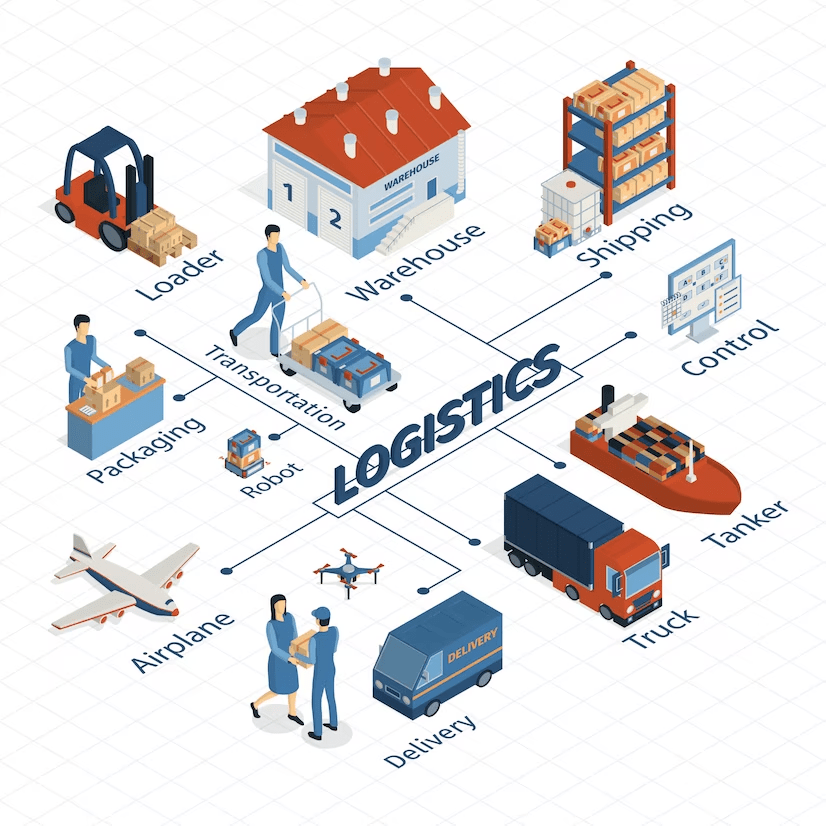
The Future of Logistics: ChatGPT Revolutionizes Supply Chain Management

The logistics industry, responsible for ensuring the seamless flow of goods and services, is no stranger to innovation. In today’s digital age, ChatGPT for logistics has emerged as a game-changing technology that promises to revolutionize supply chain management. In this article, we’ll delve into how ChatGPT is transforming the logistics landscape.

ChatGPT for Logistics: A Paradigm Shift

ChatGPT, powered by OpenAI’s cutting-edge artificial intelligence, is more than a chatbot. It’s a versatile language model that harnesses the power of natural language processing (NLP) and machine learning, making it an ideal tool for the logistics sector.

1. Real-time Communication

Effective communication is the backbone of logistics operations. ChatGPT for logistics facilitates real-time communication between logistics companies, customers, and suppliers. It can handle inquiries, provide live shipment updates, and swiftly address issues, reducing the need for time-consuming phone calls and emails.

2. Inventory Management

Inventory management is a constant juggling act. ChatGPT analyzes historical data and market trends to optimize inventory levels. By predicting demand, suggesting optimal reorder points, and preventing overstocking or understocking, it aids logistics companies in cost reduction and resource optimization.

3. Route Optimization

Efficient route planning is key to minimizing transportation costs and delivery times. ChatGPT takes into account various factors, such as traffic conditions, weather forecasts, and delivery schedules, to generate the most efficient routes. This not only saves time and money but also reduces the environmental impact of logistics operations.

ChatGPT for Logistics: Embracing the Future

As logistics companies strive to stay competitive in an ever-evolving industry, integrating ChatGPT for logistics is a strategic move. Its ability to streamline operations, enhance customer service, and provide data-driven insights positions it as an indispensable tool.

In conclusion, ChatGPT for logistics is not just a chatbot; it’s a catalyst for change in supply chain management. Its capacity to improve communication, optimize inventory, plan efficient routes, and offer data-driven insights places it at the forefront of logistics innovation.

ChatGPT for Finance: Revolutionizing Financial Services with Artificial Intelligence

The financial sector is no stranger to innovation, and ChatGPT for finance is leading the charge in adopting cutting-edge technology to enhance financial services. Developed by OpenAI, ChatGPT is changing the game in finance by offering a sophisticated AI-powered assistant. In this article, we’ll explore the transformative impact of ChatGPT for finance and why it’s becoming an indispensable tool for financial professionals.

ChatGPT for Finance: Redefining Human-Machine Interaction

ChatGPT, powered by the advanced GPT-3.5 architecture, is a remarkable natural language processing model. Its ability to understand and generate human-like text has positioned it as a game-changer in the financial industry. ChatGPT for finance is designed to assist with a wide range of tasks, from improving customer service to providing real-time market insights.

Enhancing Customer Service with ChatGPT for Finance

A primary application of ChatGPT for finance is in customer service. Financial institutions receive numerous client inquiries daily, spanning from account inquiries to investment guidance. ChatGPT for finance efficiently handles these routine queries, allowing human agents to focus on more complex matters.

The availability of ChatGPT for finance 24/7 ensures that clients receive prompt and accurate responses, contributing to enhanced customer satisfaction and loyalty.

Data-Driven Decision Making with ChatGPT for Finance

In the data-driven realm of finance, making informed decisions is paramount. ChatGPT for finance provides real-time market analyses, financial news updates, and valuable investment insights. Financial professionals can rely on ChatGPT for finance to access the latest information, facilitating quicker and more informed decision-making.

Moreover, ChatGPT for finance has the ability to analyze vast datasets, identifying intricate market trends and patterns. This data-driven approach empowers professionals to formulate precise investment strategies that may result in higher returns.

Risk Assessment and Compliance Simplified with ChatGPT for Finance

Effective risk management and regulatory compliance are top priorities in the financial sector. ChatGPT for finance plays a pivotal role in assessing the risks associated with various financial products and transactions. It also assists in ensuring that all activities adhere to the complex web of financial regulations, reducing the risk of legal complications and penalties.

The Future of ChatGPT for Finance

As AI technology continues to advance, the future of ChatGPT for finance holds immense promise. This versatile tool has the potential to automate a wide array of financial processes, from portfolio management to fraud detection. Financial institutions that embrace ChatGPT for finance can gain a competitive edge by offering superior services, reducing operational costs, and mitigating risks.

In conclusion, ChatGPT for finance is fundamentally reshaping the financial industry by enhancing customer service, providing real-time market insights, and assisting with risk management and compliance. Financial professionals and institutions that integrate ChatGPT for finance into their workflows are well-poised to excel in a rapidly changing and highly competitive financial landscape.

Custom ChatGPT Apps: Tailoring AI for Enterprise Excellence

In the era of advanced AI and conversational agents, ChatGPT, developed by OpenAI, has emerged as a groundbreaking solution for enterprises looking to revolutionize their customer interactions and operational efficiency. While the standard ChatGPT model is undeniably powerful, an increasing number of forward-thinking businesses are seizing the opportunity to create custom ChatGPT applications tailored to their specific needs and goals.

The Benefits of Custom ChatGPT

Custom ChatGPT applications offer a host of advantages that can propel enterprises toward success. Here’s why businesses are increasingly turning to custom ChatGPT:

  1. Alignment with Brand Identity: Custom ChatGPT apps allow you to fine-tune the AI’s responses to match your brand’s personality, tone, and values. This ensures that customer interactions are not only efficient but also reflect your company’s unique identity.
  2. Enhanced Data Security: Building your custom ChatGPT app grants you complete control over data handling and security. This is particularly vital in industries where data privacy and regulatory compliance are critical, such as healthcare and finance.
  3. Flexibility and Adaptability: Custom ChatGPT apps can be tailored to suit your evolving business needs. Whether it’s addressing specific customer inquiries, automating tasks, or providing specialized information, a custom ChatGPT app can adapt to your requirements.

Steps to Build Your Custom ChatGPT App

Creating a custom ChatGPT app may seem like a complex endeavor, but it can be broken down into manageable steps:

  1. Define Your Objectives: Begin by outlining your objectives. Determine the specific tasks your ChatGPT app will handle, such as customer support, lead generation, or industry-specific queries.
  2. Data Collection: Gather relevant data that your ChatGPT will be trained on. This data can include past customer interactions, product documentation, FAQs, and other pertinent information.
  3. Select the Right Tools: Choose the programming languages and frameworks that align with your development team’s expertise. Popular choices include Python, TensorFlow, and PyTorch.
  4. Training and Fine-Tuning: Train your ChatGPT model on the collected data. Fine-tuning is essential to ensure the AI comprehends context, adheres to guidelines, and provides accurate responses.
  5. Integration: Seamlessly integrate your custom ChatGPT app into your existing systems or platforms, such as websites, mobile apps, or CRM systems.
  6. Testing and Quality Assurance: Conduct comprehensive testing to identify and resolve any issues, ensuring your ChatGPT app performs optimally.
  7. Deployment: Once satisfied with performance, deploy your custom ChatGPT app for real-world usage.
  8. Continuous Improvement: Monitor user feedback and interactions to make necessary adjustments and enhancements, ensuring your ChatGPT app remains effective over time.

Conclusion: Harnessing the Power of Custom ChatGPT

In an era where customer experiences and data security are paramount, custom ChatGPT applications are a strategic choice for enterprises. They offer unparalleled personalization, data security, and adaptability, enabling businesses to enhance customer interactions and achieve their objectives. Don’t miss the opportunity to harness the potential of custom ChatGPT for your enterprise’s success.

Empowering Machine Learning: Unleashing the Potential of Embeddings as a Service

Machine learning algorithms thrive on the ability to understand and process complex data patterns. Embeddings, a powerful technique in the field of natural language processing and computer vision, have revolutionized the way machines understand and represent data. With the emergence of embeddings as a service, organizations now have access to pre-trained embedding models, eliminating the need for extensive training and enabling faster and more accurate analysis. This article explores the concept of embeddings as a service, its benefits, and its impact on the advancement of machine learning.

Understanding Embeddings:

Embeddings are mathematical representations that transform raw data, such as text or images, into numerical vectors. These vectors capture the semantic meaning, relationships, and contextual information of the data in a lower-dimensional space. By encoding data in this way, embeddings enable machine learning models to understand and generalize patterns, leading to improved performance in various tasks, including language translation, sentiment analysis, image recognition, and recommendation systems.

Embeddings as a Service:

Embeddings as a service refer to cloud-based platforms or APIs that offer pre-trained embedding models, allowing developers and data scientists to easily access and utilize these powerful representations without investing significant time and resources in training their own models. These services provide an efficient solution for organizations seeking to incorporate embeddings into their machine learning workflows quickly.

Benefits of Embeddings as a Service:

  1. Time and Resource Efficiency: Building and training high-quality embedding models can be a time-consuming and computationally intensive process. Embeddings as a service eliminate the need for organizations to invest in training infrastructure, large datasets, and lengthy training periods. By leveraging pre-trained embeddings, developers can save valuable time and computational resources, accelerating the deployment of their machine learning applications.
  2. Improved Performance: Embeddings as a service often offer state-of-the-art pre-trained models that have been trained on extensive datasets. These models capture intricate relationships and nuances within the data, resulting in improved performance on various downstream tasks. Organizations can benefit from the expertise of the service providers, who continually update and refine their embedding models to keep up with the latest advancements in the field.
  3. Accessibility: Embeddings as a service democratize the use of advanced embedding techniques, making them accessible to a wider audience. Developers and data scientists with varying levels of expertise can leverage these services without requiring in-depth knowledge of embedding model architectures or training methodologies. This accessibility fosters innovation and allows organizations to focus on their specific business needs and applications.
  4. Flexibility: Embeddings as a service often offer a range of pre-trained models tailored for different use cases and domains. This flexibility allows organizations to choose the most suitable embeddings for their specific tasks, whether it’s sentiment analysis, entity recognition, or recommendation systems. By selecting the appropriate pre-trained embeddings, businesses can achieve better results and tailor their machine learning models to their unique requirements.

In conclusion, embeddings as a service have revolutionized the landscape of machine learning, providing organizations with easy access to powerful pre-trained embedding models. By leveraging these services, developers and data scientists can unlock the potential of embeddings without the need for extensive training and computational resources. As the field of machine learning continues to advance, embeddings as a service will play a crucial role in accelerating innovation, improving performance, and driving the adoption of intelligent systems across various industries and applications.

Articles referenced include:
https://www.leewayhertz.com/embeddings-as-a-service/
https://www.leewayhertz.com/what-is-embedding/

Enhancing Machine Learning: The Power of Data Annotation Services in Data Engineering

In today’s data-driven world, the success of machine learning algorithms heavily relies on high-quality labeled data. Data annotation services play a crucial role in the data engineering process, ensuring that machine learning models receive accurate and reliable training data. With the rapid growth of artificial intelligence and the increasing demand for advanced algorithms, organizations are turning to data annotation services to leverage their expertise and streamline the development of intelligent systems. This article explores the importance of data annotation services in data engineering and how they contribute to enhancing machine learning models.

Understanding Data Annotation Services:

Data annotation involves the process of labeling, tagging, or categorizing raw data to make it understandable for machines. It involves human annotators who analyze and annotate various types of data, including text, images, audio, and video, based on specific guidelines provided by the project. These annotations serve as ground truth labels that help train machine learning models to recognize patterns, make predictions, and perform complex tasks.

Key Benefits of Data Annotation Services:

  1. Improved Accuracy: Data annotation services ensure high-quality training data by employing skilled annotators who follow strict guidelines. This meticulous process helps eliminate errors and inconsistencies in the labeled data, leading to improved accuracy and reliability of the trained models.
  2. Scalability: Data annotation services offer the advantage of scalability, allowing organizations to handle large volumes of data efficiently. By leveraging a team of trained annotators, businesses can process vast amounts of data within tight timelines, accelerating the model development process.
  3. Domain Expertise: Annotating data requires a deep understanding of the specific domain or industry for which the machine learning model is being developed. Data annotation services often have experts with specialized knowledge, enabling them to annotate data accurately and provide valuable insights that improve model performance.
  4. Time and Cost Efficiency: Outsourcing data annotation services can be a cost-effective solution for organizations. Building an in-house team of skilled annotators and developing annotation infrastructure can be time-consuming and expensive. By partnering with data annotation service providers, companies can focus on their core competencies while benefiting from expert annotation services, saving time and reducing costs.
  5. Data Privacy and Security: Data annotation service providers understand the importance of data privacy and security. They adhere to strict confidentiality agreements and implement robust security measures to safeguard sensitive data throughout the annotation process. This ensures that organizations can confidently share their data without compromising its integrity.

In conclusion, data annotation services play a vital role in data engineering, significantly enhancing the accuracy and reliability of machine learning models. Leveraging the expertise of data annotation service providers enables organizations to overcome challenges associated with annotating large volumes of data, achieve superior accuracy, and accelerate the development of intelligent systems. As the demand for advanced machine learning algorithms continues to grow, data annotation services will remain an essential component in realizing the full potential of artificial intelligence across various industries and applications.

Articles referenced include:
https://www.leewayhertz.com/data-annotation-services/
https://www.leewayhertz.com/data-annotation/

Unlocking Data-Driven Success: The Importance of Hiring Data Scientists and Data Engineers

In today’s data-centric world, businesses are recognizing the immense value of leveraging data to drive strategic decision-making, gain insights, and gain a competitive edge. To harness the power of data effectively, organizations need skilled professionals who can extract actionable information from complex datasets. In this article, we will explore the critical roles of data scientists and data engineers and highlight the importance of hiring these professionals to unlock the full potential of data-driven success.

Data Scientists: Extracting Insights from Data

Data scientists are experts in analyzing, interpreting, and extracting insights from large and complex datasets. These professionals possess a unique blend of skills, including statistical analysis, machine learning, and domain knowledge, allowing them to uncover patterns, trends, and correlations within data. By utilizing advanced analytical techniques, data scientists provide actionable insights that drive informed decision-making and fuel business growth.

Key Responsibilities of Data Scientists:

  1. Data Exploration and Cleaning: Data scientists possess the expertise to explore and clean datasets, ensuring the accuracy, completeness, and reliability of the data. They handle missing values, outliers, and inconsistencies, ensuring that the data is suitable for analysis.
  2. Statistical Analysis and Modeling: Data scientists apply statistical techniques and mathematical models to extract meaningful insights from data. They identify correlations, perform hypothesis testing, and develop predictive models that help businesses anticipate trends and make informed decisions.
  3. Machine Learning and AI Algorithms: Data scientists leverage machine learning and artificial intelligence algorithms to build predictive models and enable automation. They train models, validate their performance, and deploy them in real-world applications to drive intelligent decision-making and automate processes.
  4. Visualization and Communication: Data scientists excel at visualizing complex data in an easily understandable format. They create interactive dashboards, charts, and graphs that communicate insights effectively to stakeholders, facilitating data-driven decision-making across the organization.

Data Engineers: Enabling Effective Data Infrastructure

Data engineers are responsible for building and maintaining the data infrastructure necessary for effective data processing, storage, and retrieval. These professionals have expertise in data integration, database management, and data pipeline design. They work closely with data scientists to ensure the availability, reliability, and efficiency of data for analysis and decision-making.

Key Responsibilities of Data Engineers:

  1. Data Collection and Integration: Data engineers are skilled in gathering and integrating data from various sources, including databases, APIs, and third-party platforms. They design robust data pipelines that extract, transform, and load (ETL) data into a unified format for analysis.
  2. Database Design and Management: Data engineers design and optimize databases to support efficient data storage and retrieval. They ensure data integrity, performance, and security while managing database systems and implementing appropriate data governance practices.
  3. Big Data Processing: With the growing volume, velocity, and variety of data, data engineers specialize in big data technologies such as Apache Hadoop, Spark, and NoSQL databases. They leverage these tools to process and analyze large datasets, enabling scalable and real-time data processing.
  4. Data Security and Privacy: Data engineers play a crucial role in ensuring the security and privacy of data. They implement appropriate measures to protect sensitive information, adhere to data protection regulations, and establish data governance frameworks.

Collaboration between Data Scientists and Data Engineers

Data scientists and data engineers work in tandem to create a strong foundation for data-driven success. While data scientists focus on extracting insights and building models, data engineers provide the necessary infrastructure, data pipelines, and databases to support their work. This collaboration ensures a smooth flow of data from collection to analysis, enabling businesses to make informed decisions based on accurate and reliable information.

In conclusion, hiring data scientists and data engineers is crucial for organizations aiming to unlock the full potential of their data-driven strategies. Data scientists bring expertise in statistical analysis, machine learning, and data interpretation, enabling businesses to derive meaningful insights and make informed decisions. Data engineers, on the other hand, ensure efficient data infrastructure, data integration, and database management, laying the foundation for effective data processing and analysis. By investing in these skilled professionals, businesses can harness the power of data to drive innovation, improve operational efficiency, and gain a competitive advantage in today’s data-driven landscape.

Articles referenced include:
https://www.leewayhertz.com/hire-data-scientists/
https://www.leewayhertz.com/machine-learning-techniques/

Adaptive AI: Pioneering the Future with Adaptive AI Development Companies

Artificial Intelligence (AI) has rapidly transformed various industries, revolutionizing the way businesses operate and interact with customers. As AI continues to evolve, a new paradigm called adaptive AI has emerged, offering intelligent systems that can learn and adapt in real-time. In this article, we delve into the concept of adaptive AI and the pivotal role played by adaptive AI development companies in driving innovation and reshaping the future.

Understanding Adaptive AI

Adaptive AI refers to a branch of AI that focuses on creating intelligent systems capable of continuously learning, adapting, and improving their performance based on real-time data and changing environments. These systems go beyond traditional AI models, which often require human intervention or periodic retraining. Adaptive AI algorithms autonomously analyze and interpret new information, dynamically adjusting their behavior and decision-making processes to achieve optimal results.

The Role of Adaptive AI Development Companies

  1. Advanced Algorithmic Expertise: Adaptive AI development companies possess deep expertise in developing sophisticated algorithms that underpin adaptive AI systems. They employ advanced machine learning techniques, such as deep neural networks, reinforcement learning, and Bayesian models, to create intelligent models capable of autonomous learning and adaptation. These companies stay at the forefront of AI research, constantly refining and improving algorithms to ensure their adaptability and performance.
  2. Real-Time Data Processing: Adaptive AI development companies understand the importance of real-time data processing in enabling continuous learning and adaptation. They design AI systems that can efficiently handle vast amounts of data streaming in real-time, leveraging technologies like stream processing and distributed computing. By harnessing the power of real-time data, these companies enable adaptive AI systems to make timely and accurate decisions, even in dynamic and rapidly changing environments.
  3. Dynamic Model Updates: Adaptive AI development companies focus on developing AI models that can dynamically update themselves based on new information. These models possess the capability to learn from new data without the need for complete retraining. Through techniques like online learning and incremental model updates, adaptive AI development companies ensure that their systems remain up to date and adaptable, providing accurate insights and predictions in real-time.
  4. Contextual Understanding and Personalization: Adaptive AI development companies recognize the importance of contextual understanding and personalization in delivering tailored experiences. Their adaptive AI systems can analyze and interpret various data sources, including user behavior, preferences, and environmental factors, to provide personalized recommendations, responses, and solutions. By adapting to individual users’ needs, these systems enhance user engagement, satisfaction, and overall experience.
  5. Continuous Improvement and Optimization: Adaptive AI development companies embrace a culture of continuous improvement and optimization. They leverage feedback loops, performance monitoring, and data analytics to identify areas for enhancement and refine their AI systems over time. By constantly evaluating and iterating on their models, these companies ensure that their adaptive AI solutions stay ahead of the curve, delivering optimal results and driving innovation across industries.

In conclusion, adaptive AI stands out as a groundbreaking approach that brings intelligence and adaptability to new heights. Adaptive AI development companies play a pivotal role in shaping this future, spearheading advancements in algorithmic expertise, real-time data processing, dynamic model updates, contextual understanding, personalization, and continuous improvement. With their expertise and innovation, these companies are driving the transformation of industries and revolutionizing the way businesses harness the power of AI. As adaptive AI gains wider adoption, the impact of these development companies will continue to grow, unlocking new possibilities and ushering in a new era of intelligent, adaptable systems.

Articles referenced include:
https://www.leewayhertz.com/adaptive-ai-development-company/
https://www.leewayhertz.com/how-to-implement-adaptive-ai/

Design a site like this with WordPress.com
Get started